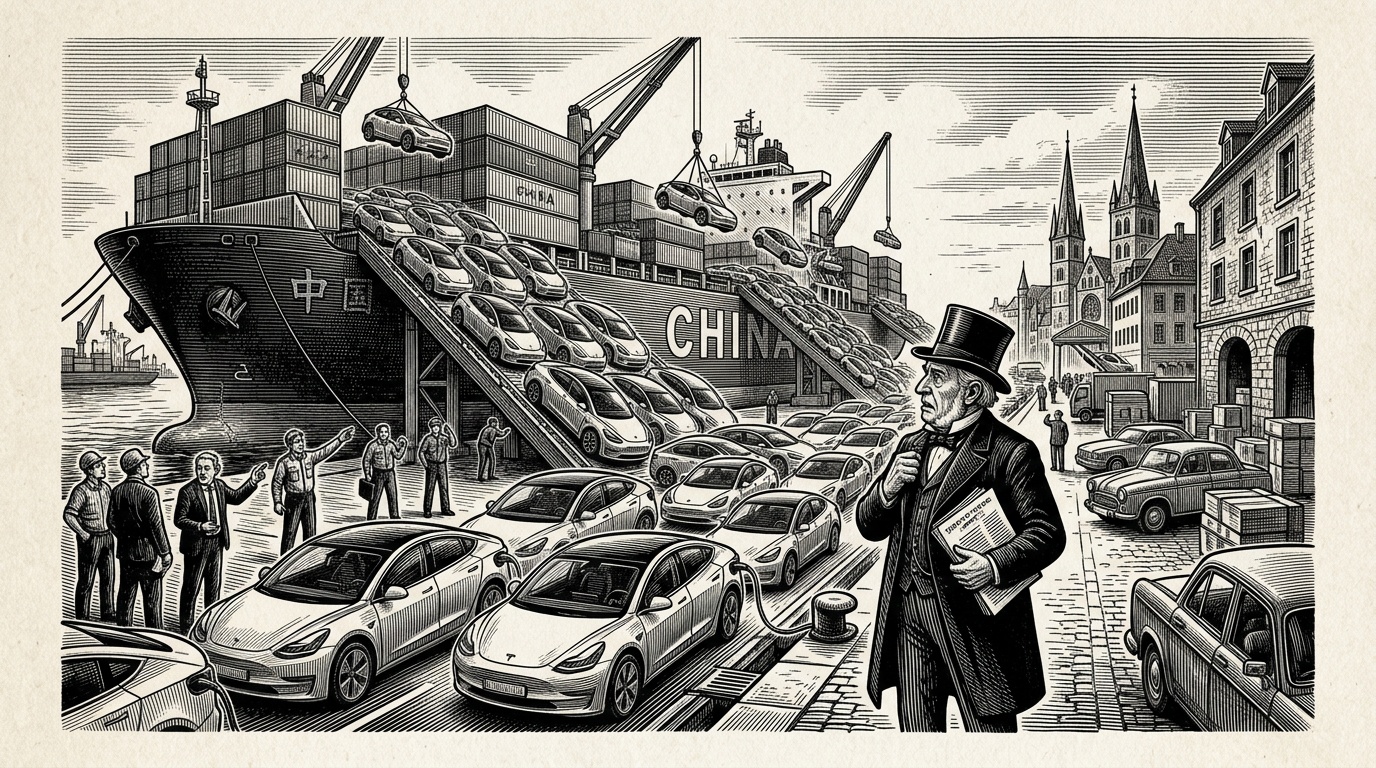
China recorded an $83 billion trade surplus with the European Union in the first quarter of 2026, according to new data, as a surge in Chinese electric vehicle exports to Europe drove the imbalance to historic levels — raising fresh concerns in Brussels about the structural vulnerability of European industry.
China sold approximately $148 billion worth of goods to the European Union between January and March 2026, while importing just $65 billion in return, according to figures reported by The Guardian. The resulting $83 billion surplus represents a record for the period and has prompted renewed debate among European policymakers about the continent's exposure to Chinese industrial competition.
Electric vehicles have emerged as a central driver of the imbalance. Chinese manufacturers, including BYD and SAIC, have dramatically expanded their presence in European markets in recent years, offering competitively priced EVs that have undercut established European and international brands. Analysts have drawn parallels to the "China shock" of the early 2000s, when a wave of low-cost Chinese manufacturing displaced significant portions of Western industrial employment.
The term, originally coined by economists David Autor, David Dorn, and Gordon Hanson to describe the labour market disruption caused by Chinese import competition in the United States, is now being applied to Europe's current predicament — particularly in the automotive sector, where legacy manufacturers such as Volkswagen, Stellantis, and Renault are simultaneously navigating the costly transition to electric vehicles and intensifying price competition from Chinese rivals.
The European Commission has already taken steps to address the imbalance. In late 2024, the EU imposed additional tariffs of up to 35 percentage points on Chinese-made EVs following an anti-subsidy investigation, a move Beijing strongly contested at the World Trade Organization. Despite those measures, the Q1 2026 data suggests the tariffs have not materially reduced Chinese export volumes into the bloc.
China has consistently argued that its manufacturers compete on genuine innovation and efficiency grounds, and has characterised European tariff measures as protectionist. Beijing has also warned of retaliatory action targeting European goods, including agricultural products, luxury items, and aircraft.
For the EU, the challenge is multifaceted. European leaders must balance the need to protect domestic industry and jobs against their own climate commitments, which depend on rapid EV adoption — a goal that cheaper Chinese vehicles could, in theory, accelerate. Critics of the tariff approach argue that shielding legacy carmakers from competition may delay the green transition and ultimately harm European consumers.
Analysis
Why This Matters
- The record surplus signals a structural shift in EU-China trade that existing tariff measures have so far failed to reverse, putting pressure on Brussels to consider more aggressive policy responses.
- European automakers face a two-front challenge: absorbing the enormous cost of electrification while competing against heavily subsidised Chinese rivals — a combination that threatens jobs and industrial output across Germany, France, and Italy.
- The trade imbalance adds a further complication to EU-China diplomatic relations at a time when Europe is already navigating tensions over Russia, Taiwan, and technology supply chains.
Background
The phrase "China shock" entered economic discourse following research by Autor, Dorn, and Hanson published in the early 2010s, documenting how China's 2001 WTO accession and subsequent export surge caused lasting damage to manufacturing employment in the United States. European economists have increasingly applied the same framework to the continent's industrial base.
The EV dimension represents a new chapter in this dynamic. China's government has invested heavily in its electric vehicle sector for over a decade through subsidies, preferential financing, and domestic market protections, enabling manufacturers to develop competitive products at scale before expanding aggressively into export markets. By 2024, Chinese brands had captured a meaningful share of European EV sales, prompting the EU's anti-subsidy probe.
The EU imposed provisional tariffs on Chinese EVs in mid-2024, with final measures confirmed later that year. However, some Chinese manufacturers responded by exploring European assembly operations — a strategy that could allow them to sidestep import duties while maintaining cost advantages through Chinese-sourced components.
Key Perspectives
European Commission: Defends the anti-subsidy tariffs as a legitimate and WTO-compliant response to market-distorting state support, and argues that a level playing field is essential for the long-term health of the European automotive industry.
Chinese Government and Manufacturers: Maintain that their competitiveness reflects genuine technological progress and manufacturing efficiency, and characterise European tariffs as protectionist barriers that violate free trade principles. Beijing has threatened and, in some areas, begun implementing retaliatory trade measures.
Critics and Sceptics: Some European economists and consumer advocates warn that tariffs primarily protect incumbents and raise prices for buyers, potentially slowing EV adoption. Others argue the measures are too limited and too late to meaningfully alter the competitive landscape without a broader industrial strategy.
What to Watch
- Monthly EU-China trade data for Q2 2026, which will indicate whether the surplus trajectory is continuing or beginning to stabilise.
- WTO dispute proceedings initiated by China over EU EV tariffs — a ruling against Brussels could force a significant policy recalibration.
- Announcements from Chinese manufacturers regarding European assembly plants, which could reshape how future trade flows are counted and regulated.