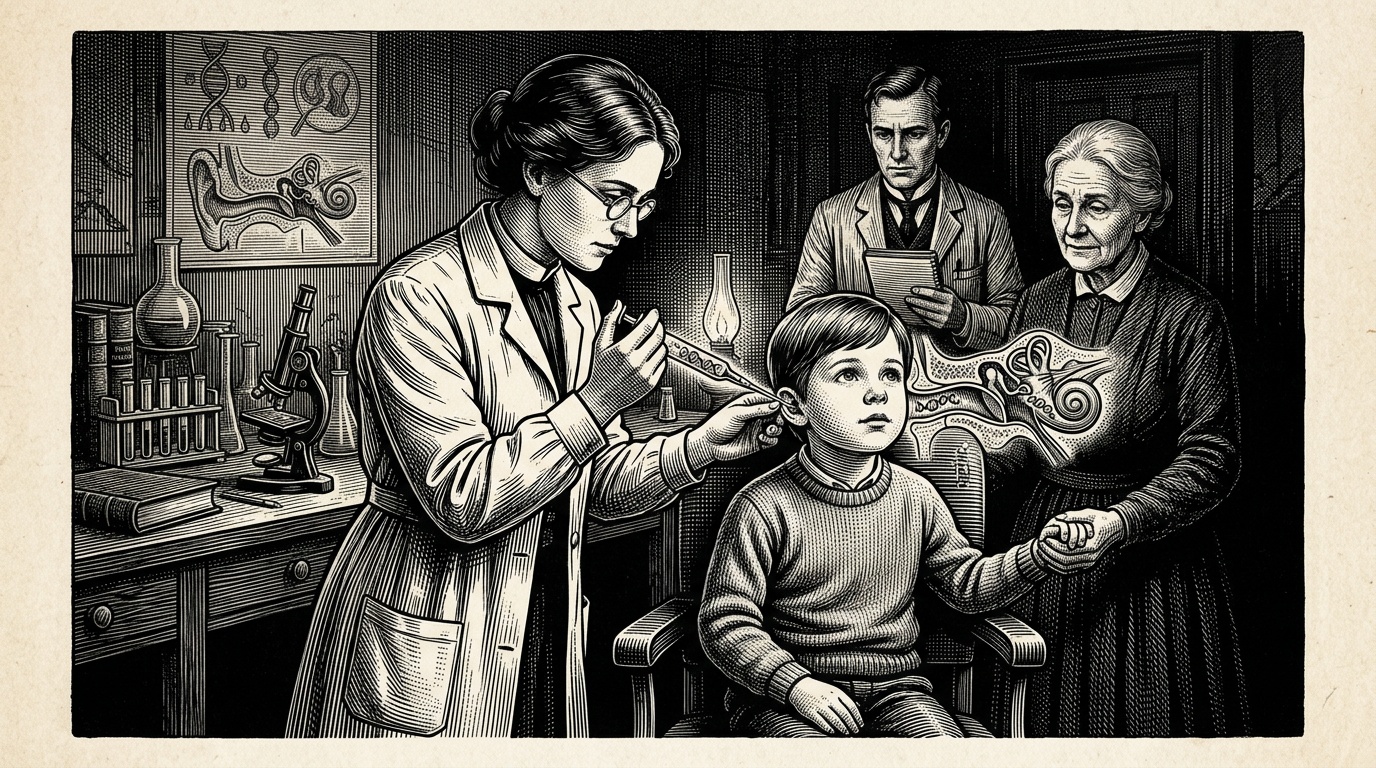
The U.S. Food and Drug Administration has approved the first gene therapy designed to treat genetic hearing loss, a landmark decision that could offer new hope to hundreds of thousands of Americans born with inherited forms of deafness or severe hearing impairment.
The U.S. Food and Drug Administration has granted approval to the first gene therapy targeting genetic hearing loss, marking a significant milestone in both audiology and the broader field of gene-based medicine.
Genetic hearing loss is among the most common sensory disorders present at birth, affecting approximately one in 500 newborns in the United States. Mutations in a single gene, most commonly GJB2 — which encodes the protein connexin 26 — account for a substantial proportion of cases of congenital deafness. Until now, treatment options have been largely limited to hearing aids and cochlear implants, which assist with sound perception but do not address the underlying genetic cause.
Gene therapy approaches in audiology typically involve delivering a functional copy of a defective gene directly into the cells of the inner ear, known as hair cells, using a viral vector. Early clinical trials in the United States, Europe, and China have demonstrated meaningful hearing restoration in children with specific genetic mutations, with some patients gaining sufficient hearing to understand speech without assistive devices.
The FDA approval follows a rigorous review process examining clinical trial data for safety and efficacy. Regulators have placed increasing emphasis on gene therapies for rare and paediatric conditions in recent years, with the agency's accelerated pathways helping bring several such treatments to market.
The approval is expected to have broad implications for newborn screening programmes, which already test for hearing loss in most U.S. states. Identifying children with genetic forms of hearing loss earlier could now lead directly to curative intervention rather than solely assistive care.
However, significant questions remain. Gene therapies have historically carried very high price tags — some exceeding one million dollars per treatment — raising immediate concerns about insurance coverage and equitable access. Additionally, the therapy's effectiveness may vary depending on which specific gene mutation a patient carries, meaning not all individuals with genetic hearing loss will be eligible candidates.
Advocacy groups within the deaf and hard-of-hearing community have expressed mixed reactions. While many welcome expanded medical options, some members of the culturally Deaf community caution against framing deafness purely as a condition requiring a cure, emphasising that deaf identity and culture carry profound value independent of hearing ability.
Medical professionals have broadly welcomed the approval as a scientific achievement, while stressing that gene therapy should be presented to families as one option among several, not a universal recommendation.
Analysis
Why This Matters
- This approval opens a new clinical pathway for children born with genetic deafness, potentially offering restoration of hearing rather than management of the condition — a fundamental shift in treatment philosophy.
- The decision will likely accelerate research into gene therapies for other forms of sensory and neurological genetic disorders, building on established regulatory and scientific frameworks.
- Access and affordability will be a defining challenge: how insurers, Medicare, and Medicaid respond to coverage decisions could determine whether this therapy reaches the patients who need it most.
Background
Genetic hearing loss has been recognised as a major target for gene therapy research for over two decades. The identification of GJB2 as a leading cause of congenital deafness in the 1990s gave researchers a clear genetic target. Early animal studies in the 2000s demonstrated that delivering functional copies of key auditory genes could restore hearing function in mice, laying the groundwork for human trials.
Human clinical trials accelerated significantly in the early 2020s, with programmes at institutions including Harvard, the University of Pennsylvania, and several Chinese research hospitals reporting positive early outcomes. A landmark 2024 study published in The Lancet described meaningful hearing recovery in a cohort of young children treated with a viral vector carrying a corrected OTOF gene, which encodes the protein otoferlin — critical for sound signal transmission.
The FDA's approval represents the culmination of this research arc, bringing a therapy from laboratory concept to regulated clinical practice in a field where patients have historically had limited curative options.
Key Perspectives
Medical researchers and audiologists: View the approval as a transformative development that validates decades of investment in inner ear gene therapy and could serve as a model for future sensory disorder treatments.
Patient families and hearing loss advocates: Many families of children with genetic deafness have expressed cautious optimism, welcoming a potential curative option while seeking clarity on eligibility criteria, long-term safety, and cost.
Culturally Deaf community: Some advocates raise important ethical concerns, arguing that societal pressure to "fix" deafness can marginalise Deaf culture and identity. Organisations such as the National Association of the Deaf have historically called for informed, non-coercive approaches to medical intervention in deaf children.
Critics and sceptics: Health economists warn that without robust coverage mandates, a therapy likely to cost hundreds of thousands to over a million dollars could remain inaccessible to most patients, particularly those from lower-income backgrounds or without comprehensive insurance.
What to Watch
- The therapy's list price when announced by the manufacturer, and subsequent negotiations with major insurers and government health programmes.
- FDA labelling details specifying which genetic mutations qualify for treatment, which will define the eligible patient population.
- Long-term follow-up data from clinical trial participants to assess the durability of hearing restoration over years and decades.