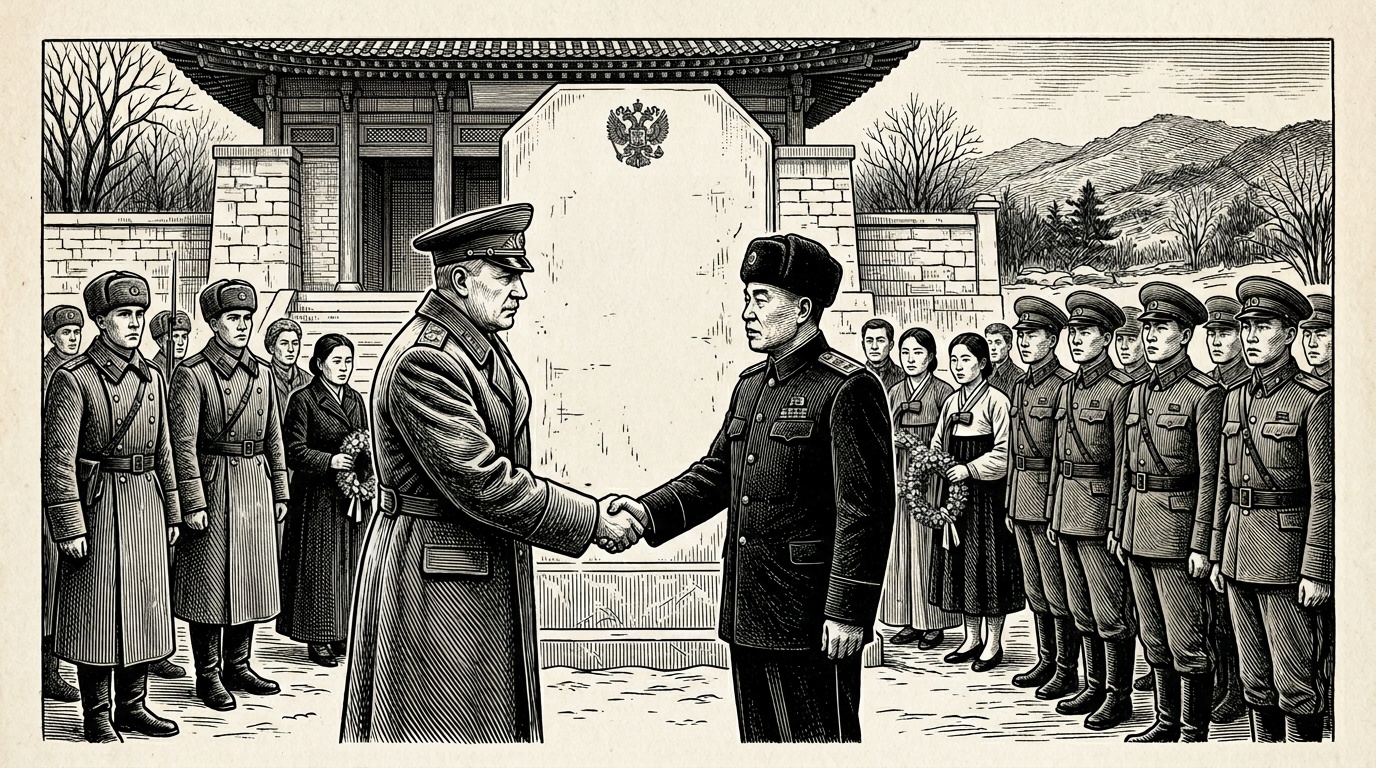
Russia and North Korea have moved to cement their military partnership, opening a memorial museum in Pyongyang for North Korean soldiers killed fighting alongside Russian forces in Ukraine, while pledging further long-term cooperation — developments that coincided with fresh Russian strikes on the Ukrainian port city of Odesa and duelling accusations over the Zaporizhzhia nuclear plant on Sunday.
Senior officials from Russia and North Korea convened in Pyongyang on Sunday to inaugurate a museum honouring North Korean troops who died during Russia's ongoing war in Ukraine, framing their shared campaign in explicitly ideological terms. Both governments described the conflict as a 'sacred' war, according to reporting by the New York Times, and signed commitments to expand military cooperation over the long term.
The symbolic ceremony marks a significant step in formalising what had previously been treated, at least in public statements, as a more ambiguous relationship. North Korea's deployment of troops to support Russian forces had drawn international condemnation, with Western governments warning that Pyongyang's involvement risked broadening the conflict and undermining regional stability.
The diplomatic pageantry in Pyongyang unfolded as the war itself continued to escalate on multiple fronts. Al Jazeera reported that Russian forces launched fresh attacks on Odesa, one of Ukraine's most strategically important port cities on the Black Sea. The strikes added to mounting civilian and infrastructure damage across southern Ukraine.
Separately, Russia's installed managers at the Zaporizhzhia nuclear power plant — Europe's largest, which has been under Russian control since early in the war — claimed that Ukrainian forces struck the facility, killing one worker. Ukrainian officials have not confirmed responsibility for the reported incident, and independent verification of claims made by Russian-appointed plant administrators remains difficult. Ukraine has long accused Russia of using the plant as a military shield, while Russia has accused Ukraine of endangering the site.
The Zaporizhzhia plant has been a source of acute international concern since its capture in March 2022. The International Atomic Energy Agency (IAEA) has maintained a monitoring presence there, repeatedly warning that military activity near the facility poses unacceptable nuclear safety risks.
Together, Sunday's developments illustrated the compounding pressures on diplomatic efforts to halt the conflict, with the Russia-North Korea alliance growing more overt and military activity intensifying on both sides.
Analysis
Why This Matters
- The formalisation of Russia-North Korea military cooperation introduces a new and unpredictable variable into an already complex conflict, with implications for arms flows, troop deployments, and the broader geopolitical contest between Western-aligned nations and the Russia-China-North Korea axis.
- Any military incident at the Zaporizhzhia nuclear plant — whether confirmed or disputed — carries the potential for catastrophic escalation and has already kept European governments on high alert for over two years.
- The opening of a commemorative museum signals that North Korea is no longer concealing its role in the war, which could lower the diplomatic cost for Pyongyang of deepening future involvement.
Background
Russia's full-scale invasion of Ukraine began in February 2022, triggering the largest European land war since World War II. In the months that followed, Moscow found itself increasingly isolated from Western technology, finance, and weapons systems, pushing it towards closer ties with states outside the Western-led order.
North Korea's military involvement reportedly began with the supply of artillery shells and munitions, before escalating — according to US, South Korean, and Ukrainian intelligence assessments — to the deployment of thousands of troops to Russian-controlled territory. Pyongyang initially denied these claims, but the opening of a commemorative museum for fallen soldiers makes continued denial implausible.
The Zaporizhzhia nuclear plant has been under Russian military control since March 2022. The IAEA has documented repeated losses of external power and warned of near-misses that could trigger a nuclear incident. Both sides have repeatedly accused the other of shelling the facility.
Key Perspectives
Russia and North Korea: Both governments frame their cooperation as a legitimate alliance against what they describe as Western aggression and imperialism. The memorial museum serves a domestic propaganda function for Pyongyang while signalling to Moscow — and the world — that the partnership is durable.
Ukraine and Western Allies: Kyiv and its partners view the deepening Russia-North Korea axis as a deliberate effort to sustain a war of attrition that Ukraine cannot win without continued Western support. They argue international sanctions on North Korea must be enforced more rigorously to sever the military supply chain.
Critics and Nuclear Safety Monitors: The IAEA and independent analysts warn that the conflation of active warfare with the operation of a major nuclear facility represents an unprecedented and ongoing safety risk. Attributing responsibility for specific incidents at Zaporizhzhia is complicated by the information environment, leaving the international community unable to respond effectively.
What to Watch
- Whether the IAEA formally investigates the reported Zaporizhzhia incident and what its findings indicate about the plant's structural and operational integrity.
- Upcoming NATO and G7 meetings, where member states are expected to debate further military aid packages for Ukraine and potential new sanctions targeting the Russia-North Korea arms pipeline.
- Any concrete announcements arising from the Russia-North Korea military cooperation agreement, particularly regarding troop numbers, weapons transfers, or joint command structures.