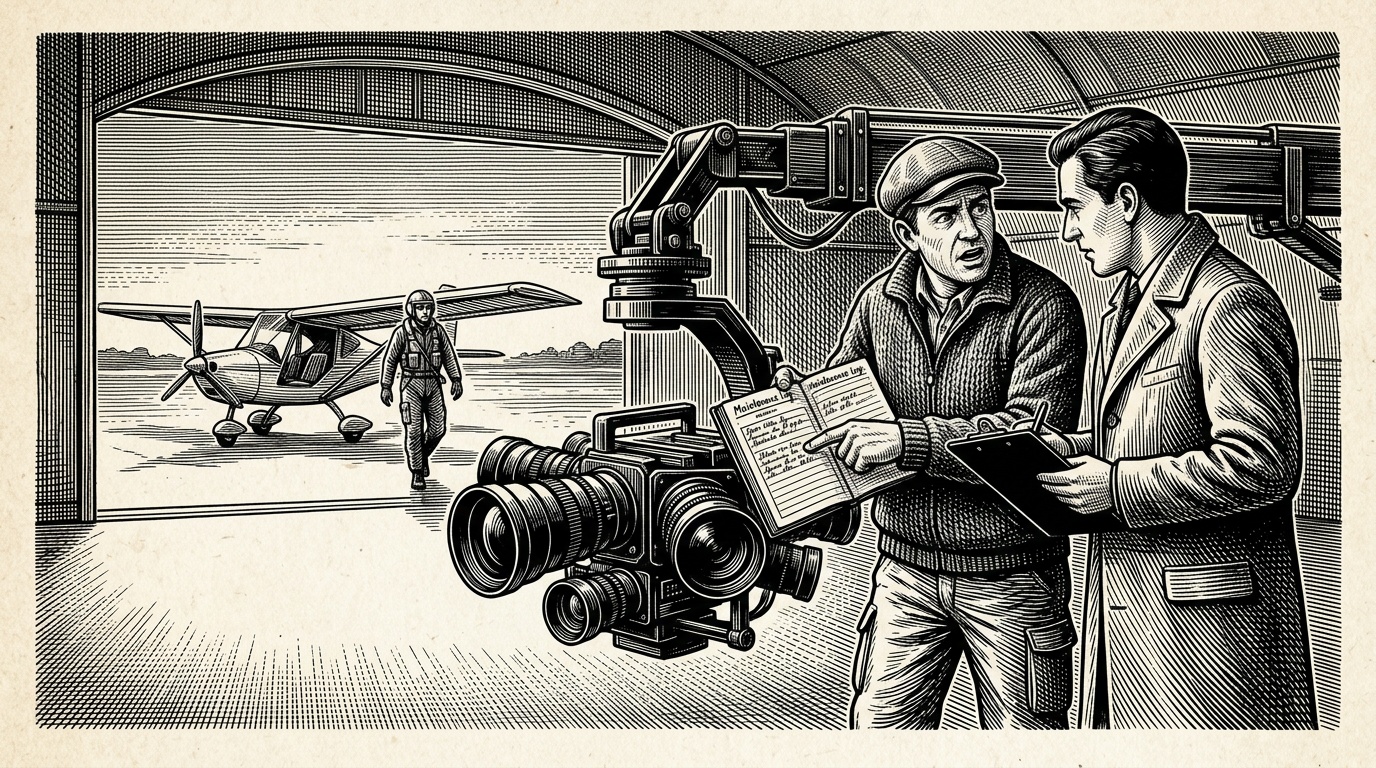
Crew members working on an Apple Vision Pro immersive video production raised safety concerns with Apple prior to a fatal microlight aircraft crash that killed a pilot and athlete who was being filmed for the series 'Adventure', according to reports published Wednesday.
A fatal microlight plane crash that claimed the life of a pilot and athlete occurred during the production of Apple's immersive video series Adventure, made for the Vision Pro headset — and crew members had reportedly flagged safety concerns to Apple before the accident took place.
According to a report by 9to5Mac, production crew raised alarms ahead of the crash, citing issues including limited training for those involved and unsafe working hours on set. The precise timing and location of the incident have not been fully disclosed in available reporting, but the crash has drawn scrutiny to the safety practices surrounding high-risk content production for Apple's premium mixed-reality device.
The Vision Pro Content Push
Apple has invested significantly in immersive video content for the Vision Pro, positioning the format as one of the device's key differentiators. The Adventure series was part of that strategy, featuring high-adrenaline footage designed to showcase the headset's spatial video and immersive playback capabilities. Productions of this nature routinely involve athletes, extreme sports, and vehicles — all of which carry inherent risk.
The revelation that pre-incident safety warnings were made to Apple raises questions about whether those concerns were adequately addressed before filming continued. It is not yet clear from available reporting what, if any, steps Apple or the production company took in response to the crew's warnings.
Questions of Responsibility
Film and television productions operating in high-risk environments are subject to strict occupational health and safety regulations in most jurisdictions. The death has prompted broader questions about duty of care — both from Apple as the commissioning party and from whatever production company was directly managing the shoot.
Apple has not yet issued a public statement in response to the reports. The company has not confirmed whether it has launched an internal review or is cooperating with any official investigation into the circumstances of the crash.
The incident echoes broader industry concerns about safety on film sets involving dangerous activities. In recent years, high-profile accidents during productions — including fatal shootings and stunt-related deaths — have intensified calls for stronger industry-wide safety standards and greater accountability for commissioning studios.
Authorities are expected to investigate the crash. The outcome of any inquiry could have legal and regulatory implications for Apple and the production entities involved.
Analysis
Why This Matters
- If Apple received safety warnings and filming continued regardless, the company could face significant legal liability and reputational damage beyond the tragedy itself.
- The case raises broader questions about the duty of care that technology companies bear when commissioning third-party productions for their platforms and devices.
- Regulatory scrutiny of high-risk film productions has been growing globally; this incident may accelerate calls for stricter oversight of content commissioned by major tech platforms.
Background
Apple launched the Vision Pro in February 2024 at a starting price of $3,499, positioning immersive spatial video as one of its signature features. To populate the platform with compelling content, Apple commissioned a range of immersive video productions, including the Adventure series, which featured extreme sports and high-risk activities filmed in formats designed to take full advantage of the headset's capabilities.
High-risk productions have long been a source of concern in the film industry. The fatal shooting of cinematographer Halyna Hutchins on the set of the film Rust in 2021 reignited debates about safety protocols on film sets and the accountability of producers and studios. That case resulted in criminal proceedings and calls for mandatory safety reforms across the industry.
Occupational safety law in most jurisdictions requires that employers and commissioning parties act on reported safety concerns. Whether Apple is considered a direct employer or a client in this context may prove central to any legal proceedings that follow.
Key Perspectives
Apple: The company has not publicly commented on the incident or the pre-crash safety warnings. Its position — and the degree to which it acted on crew concerns — remains unknown and will likely be central to any investigation.
Production crew and industry workers: The willingness of crew members to report safety concerns suggests awareness of risk on set. Their accounts, if corroborated, could form the basis of regulatory complaints or civil litigation and amplify calls for stronger protections for workers on high-risk productions.
Critics and safety advocates: Industry safety advocates are likely to argue that commissioning companies like Apple bear responsibility for ensuring that productions conducted in their name adhere to rigorous safety standards, particularly when the content involves inherently dangerous activities such as aviation.
What to Watch
- Whether aviation or workplace safety authorities launch a formal investigation and what findings they produce regarding the cause of the crash and the handling of prior safety complaints.
- Any legal action — civil or criminal — brought against Apple, the production company, or individuals responsible for safety decisions on the shoot.
- Apple's official response, including whether it acknowledges receiving safety warnings and what internal review processes, if any, it initiates.