Solar Energy Overtakes All Other Sources in Historic Global First, IEA Reports

The International Energy Agency confirms solar has become the world's leading electricity source by new capacity added

edit
By LineZotpaper
Published
Read Time3 min
Sources3 outlets
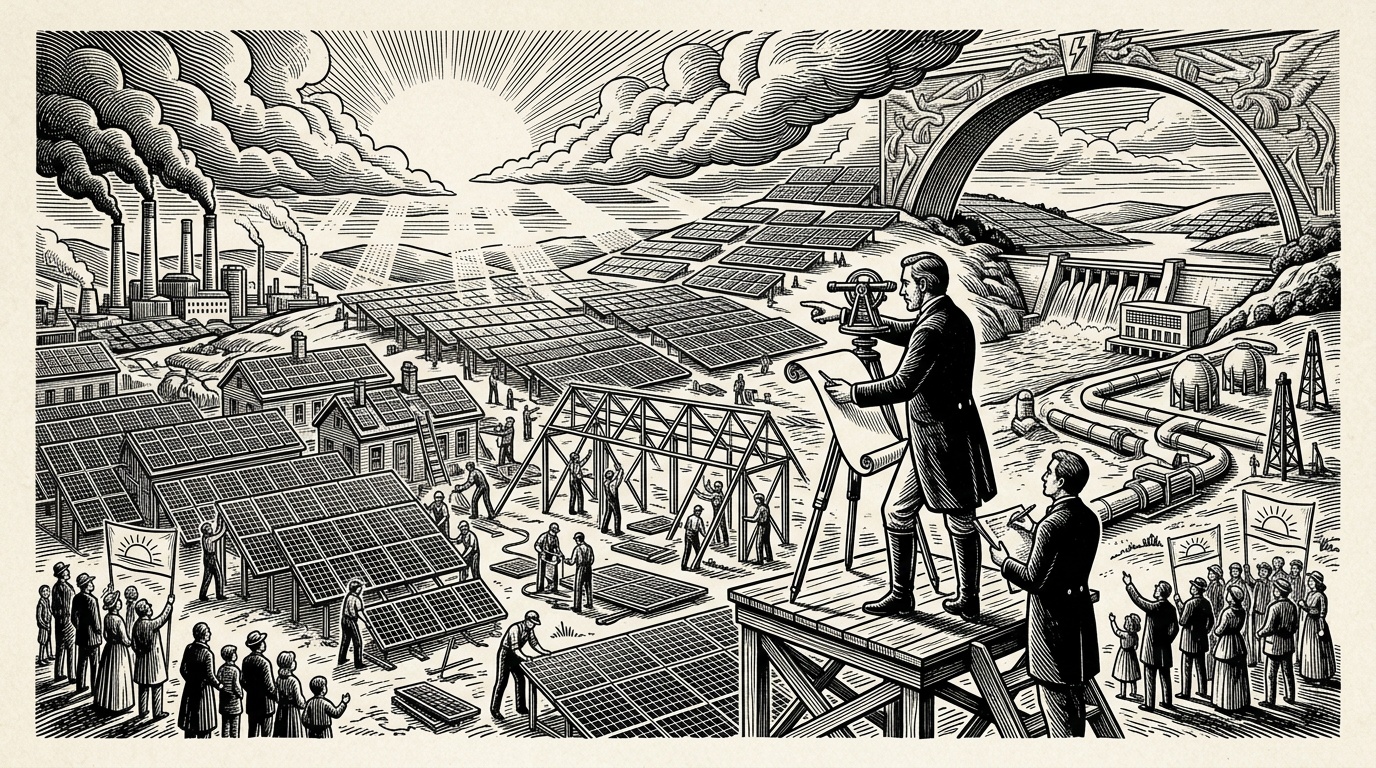
Solar power has surpassed every other energy source globally for the first time in history, according to a new report from the International · AI-generated illustration · Zotpaper
Solar power has surpassed every other energy source globally for the first time in history, according to a new report from the International Energy Agency (IEA), marking a significant milestone in the world's transition away from fossil fuels and toward renewable energy generation.

Solar energy has achieved a landmark global first, overtaking all other power sources in a milestone that energy analysts say underscores the accelerating pace of the clean energy transition.

The International Energy Agency, which tracks global energy trends and advises member governments on policy, confirmed the development in findings that highlight solar's extraordinary growth trajectory over the past decade. The technology, once considered too expensive for widespread deployment, has seen its costs fall by more than 90% since 2010, making it the cheapest source of electricity in history across much of the world.

A Decade of Rapid Growth

Solar installations have expanded at a pace that has repeatedly exceeded even optimistic projections from the IEA itself. Countries including China, the United States, India, and members of the European Union have driven much of that growth, motivated by a combination of climate commitments, energy security concerns following the 2022 disruption to global gas markets, and straightforward economics.

China alone accounts for a substantial share of global solar capacity, having invested heavily in both manufacturing and domestic deployment. Meanwhile, emerging economies across Southeast Asia, Africa, and Latin America are increasingly turning to solar as an affordable path to expanding electricity access.

What the Milestone Means

The IEA's finding refers to solar leading among new capacity additions — meaning more solar generation capacity was installed in the measured period than any other source, including wind, natural gas, coal, or nuclear. This is distinct from solar providing the largest share of total electricity generated, a threshold that has not yet been reached given that existing fossil fuel infrastructure still produces the majority of the world's power.

Nonetheless, energy experts describe the capacity milestone as a significant leading indicator. New capacity additions today shape the electricity mix of the coming decades, as power plants and solar farms typically operate for 20 to 40 years.

Challenges Remain

Despite the headline achievement, analysts caution that solar's intermittent nature — it generates power only when the sun shines — presents ongoing challenges for grid stability. Investment in battery storage, long-distance transmission infrastructure, and complementary technologies such as wind and hydropower will be essential to translate solar's installed capacity into reliable around-the-clock power supply.

Grid integration, permitting delays, and the availability of critical minerals for panels and batteries remain constraints in many markets. Some energy analysts also note that absolute emissions from the global power sector have not yet peaked, as electricity demand continues to grow faster than clean sources can displace fossil fuels in some regions.

§

Analysis

Why This Matters

  • Solar's rise to the top of global capacity additions signals a structural, economics-driven shift in energy investment — not merely a policy-driven one — making the transition harder to reverse regardless of political headwinds.
  • For consumers and businesses, the continued cost decline of solar translates into downward pressure on electricity prices in competitive markets, with implications for household budgets and industrial competitiveness.
  • The milestone accelerates pressure on fossil fuel producers and investors to reassess long-term asset valuations, as peak demand scenarios for coal and gas move closer.

Background

The IEA, founded in 1974 in response to the OPEC oil crisis, was originally created to ensure energy security for oil-importing nations. For decades, its forecasts were criticised for systematically underestimating solar's growth potential — the agency repeatedly revised its projections upward as deployment outstripped expectations.

Solar's rise accelerated after 2010 as Chinese manufacturing scaled up dramatically, driving panel costs into freefall. The 2015 Paris Agreement and subsequent national net-zero commitments provided political reinforcement, while the global energy crisis sparked by Russia's invasion of Ukraine in 2022 added energy security as a further motivation for many governments to accelerate domestic renewable deployment.

By the early 2020s, solar was already the cheapest source of new electricity generation in most of the world. The question shifted from whether solar would dominate new capacity additions to when — and that moment has now arrived.

Key Perspectives

Renewable energy advocates: Describe the milestone as validation that the energy transition is structurally irreversible and call for accelerated policy support for storage and grid infrastructure to enable solar to deliver its full potential.

Fossil fuel industry: Argues that intermittency and grid stability concerns mean conventional generation remains essential for baseload power, and that capacity figures do not reflect actual electricity delivered — solar's capacity factor is typically 15–25%, far below that of coal or gas plants.

Critics/Skeptics: Some energy economists warn that grid integration costs are often underrepresented in headline figures, and that the pace of the transition varies enormously by region — parts of Asia and Africa remain heavily dependent on new coal construction despite the global trend.

What to Watch

  • Whether the IEA's next World Energy Outlook revises upward its solar deployment forecasts again, as it has done repeatedly in previous editions.
  • Progress on battery storage deployment and long-duration storage technologies, which will determine how quickly solar capacity translates into a dominant share of actual electricity generation.
  • China's continued role in solar manufacturing amid rising trade tensions with the US and EU, including tariffs and supply chain diversification efforts that could affect global panel prices and deployment rates.

Sources

newspaper

Zotpaper

Articles published under the Zotpaper byline are synthesized from multiple source publications by our AI editor and reviewed by our editorial process. Each story combines reporting from credible outlets to give readers a balanced, comprehensive view.