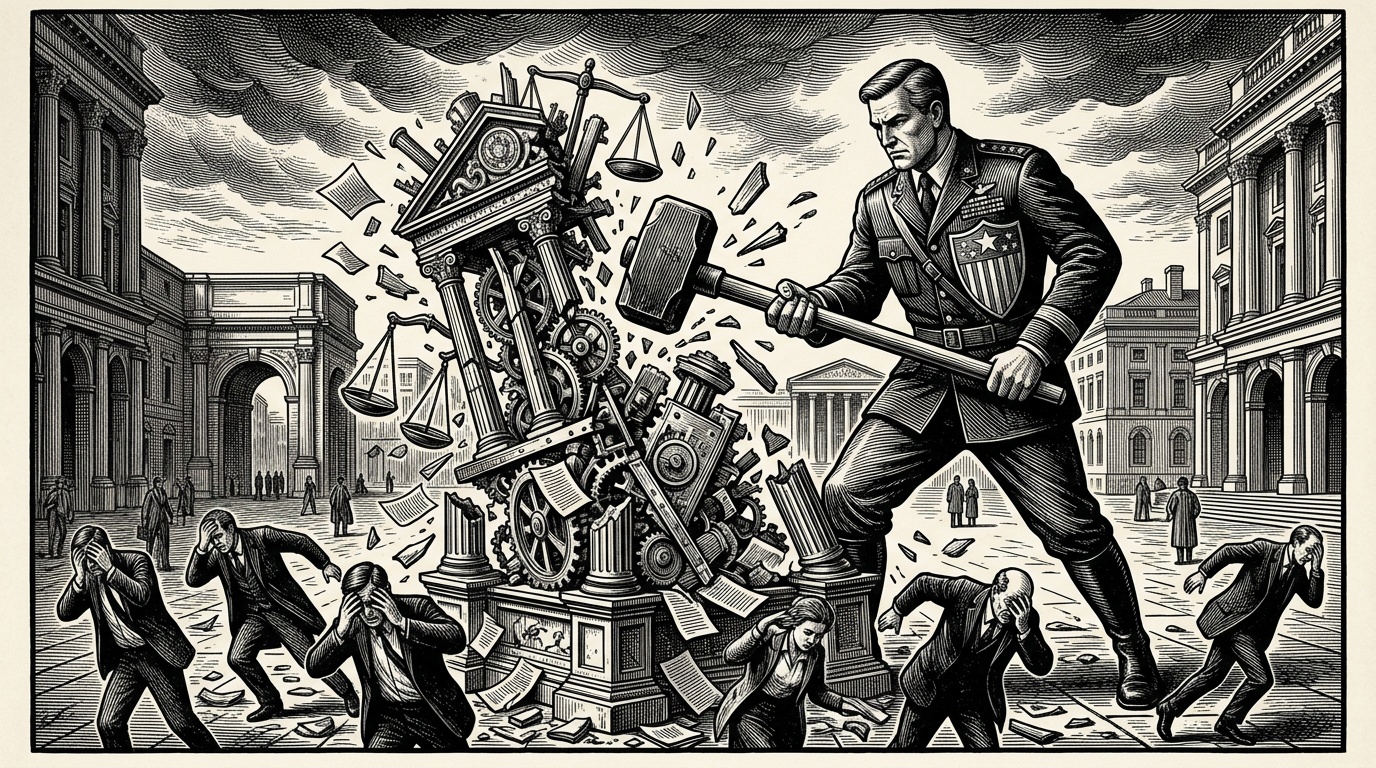
Military strikes by the United States and Israel against Iran, justified in part by concerns over Tehran's nuclear weapons ambitions, are generating significant debate among arms control experts and international observers about whether the attacks are eroding confidence in the Nuclear Non-Proliferation Treaty — the cornerstone of global efforts to prevent the spread of nuclear weapons.
The US-Israeli military campaign against Iran has reignited a long-running debate about the limits of armed intervention in disputes over nuclear programmes, with analysts warning that the strikes could have lasting consequences for the international non-proliferation regime.
At the heart of the concern is the Nuclear Non-Proliferation Treaty (NPT), a 1968 international agreement that forms the bedrock of global efforts to prevent nuclear weapons from spreading beyond the states that already possess them. Critics of the strikes argue that using military force against a signatory state — even one accused of pursuing nuclear weapons — sets a dangerous precedent that could weaken the treaty's authority and credibility.
A Question of Legitimacy
Proponents of the military action contend that Iran's alleged pursuit of nuclear weapons represents a direct violation of its NPT commitments, and that diplomatic channels have been exhausted after years of negotiations and sanctions. From this perspective, the strikes represent a last resort to prevent nuclear proliferation, not an attack on the non-proliferation framework itself.
Opponents, however, argue that bypassing international institutions — particularly the International Atomic Energy Agency (IAEA) and the UN Security Council — in favour of unilateral military action fundamentally undermines the multilateral architecture that the NPT depends upon. They contend that if powerful states can attack others under the justification of suspected nuclear programmes, other nations may conclude that treaty membership offers little protection, and that acquiring nuclear weapons independently is the only reliable deterrent.
Broader Implications for Global Security
The strikes come at a moment of heightened global tension over nuclear weapons, with arms control agreements between major powers already under severe strain. Observers note that nations watching the conflict — particularly those in unstable regions who might consider pursuing their own nuclear deterrents — will be closely evaluating what lessons can be drawn from Iran's experience.
Some analysts point out that the history of the NPT is already complicated by perceived double standards: nuclear-armed states have been slow to fulfil their own disarmament obligations under the treaty, while non-nuclear states face intense scrutiny and pressure. The current conflict, they argue, risks deepening that asymmetry.
The situation remains fluid, with the full diplomatic and strategic fallout of the strikes yet to be determined. International bodies including the United Nations have called for restraint and a return to diplomatic engagement, though the prospects for resumed negotiations appear limited in the short term.
For now, the conflict has thrust the NPT and the broader question of how the international community enforces nuclear norms — and at what cost — back to the centre of global debate.
Analysis
Why This Matters
- The NPT is the primary legal and diplomatic tool preventing the spread of nuclear weapons to additional states; damage to its credibility could accelerate proliferation risks globally.
- Nations watching the Iran conflict may recalculate whether treaty membership offers genuine security guarantees, potentially motivating future nuclear weapons programmes.
- The precedent set by military strikes on a treaty signatory's nuclear infrastructure could shape how future nuclear disputes are handled for decades.
Background
The Nuclear Non-Proliferation Treaty, which entered into force in 1970, has 191 signatory states and rests on three pillars: preventing the spread of nuclear weapons, promoting disarmament among nuclear-armed states, and facilitating peaceful nuclear energy. Iran joined the NPT in 1970 but has long been accused by Western powers and Israel of using its civilian nuclear programme as cover for weapons development — allegations Tehran has consistently denied.
Decades of diplomatic efforts, including the landmark 2015 Joint Comprehensive Plan of Action (JCPOA), attempted to place verifiable limits on Iran's nuclear activities in exchange for sanctions relief. The JCPOA collapsed after the United States withdrew in 2018 under the Trump administration, and subsequent efforts to revive the deal stalled. Iran progressively expanded its uranium enrichment activities in the years that followed, increasing pressure from the US and Israel.
Israel, which is not itself a signatory to the NPT and is widely believed to possess nuclear weapons, has long regarded Iran's nuclear programme as an existential threat. The US has provided various forms of support to Israeli security operations throughout the region over many decades.
Key Perspectives
United States and Israel: Frame the military action as a necessary response to an imminent proliferation threat, arguing that Iran's nuclear advances left no credible diplomatic alternative and that a nuclear-armed Iran would destabilise the entire Middle East region.
Iran and Supporters: Condemn the strikes as illegal aggression against a sovereign state and NPT member, arguing they violate international law and undermine the very non-proliferation norms the attackers claim to be defending.
Arms Control Experts and Multilateralists: Express concern that bypassing the UN Security Council and the IAEA sets a damaging precedent, warning that the strikes could encourage other states to abandon treaty commitments or accelerate covert nuclear programmes as a deterrent against future military action.
What to Watch
- Statements from non-aligned nations and NPT review conference participants about their confidence in the treaty framework following the strikes.
- Iran's formal response to the NPT regime — including whether Tehran withdraws from or suspends treaty obligations, as North Korea did in 2003.
- Reactions from other states with latent nuclear ambitions, particularly in the Middle East, who may reassess their strategic calculus in light of Iran's experience.